Three layers, one fine line
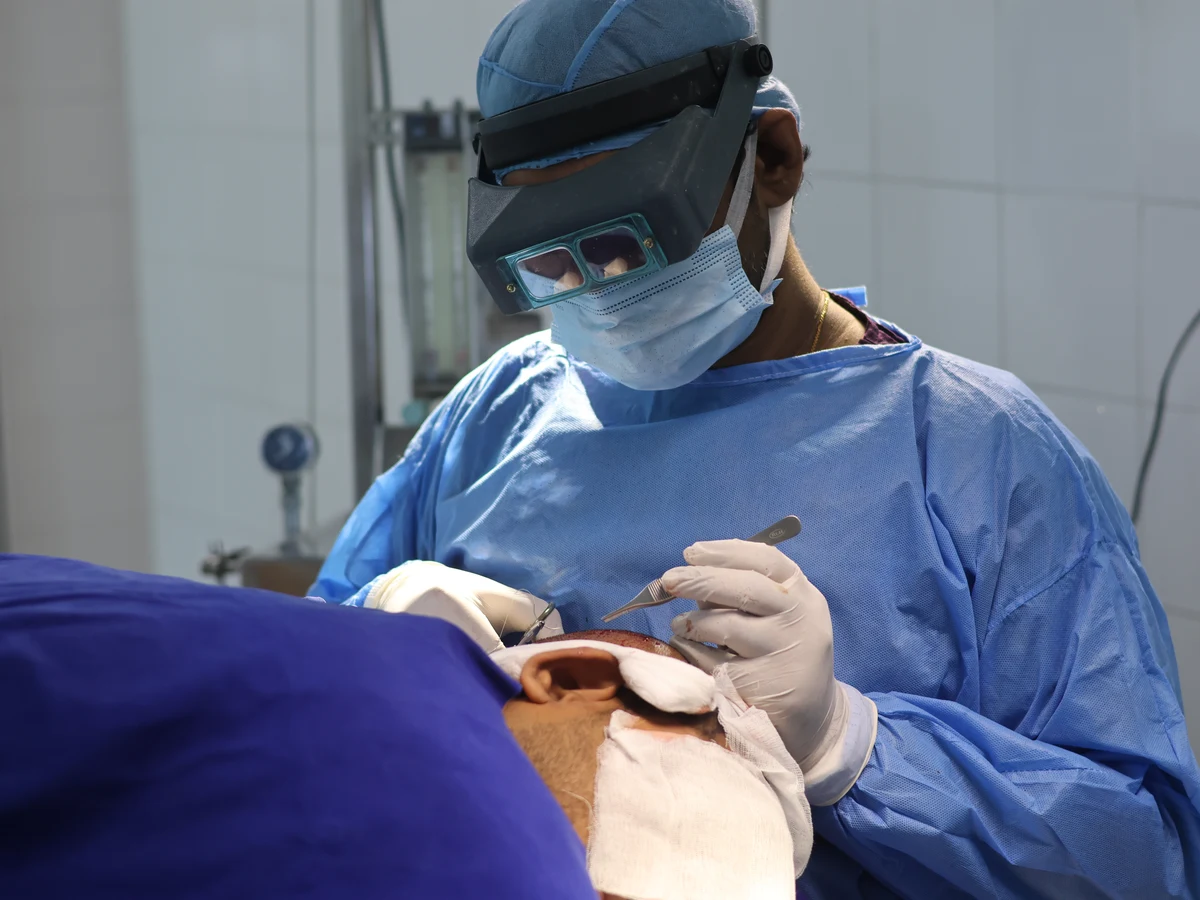
Dr. Pathuri Madhu further developed a method that combines trichophytic closure with triple-layered closure, also using staples, to make the donor scar as fine as possible.
FUT donor scar · Hyderabad
Experienced. Expert. Ethical.
How the donor wound is closed so the scar is as fine as possible
Trichophytic closure is a way of stitching the donor area after a FUT strip is removed, which reduces the scar. Hair can later grow through the scar line, so it is hidden by your own hair.
Step by step
Dr. Madhu's method
Dr. Pathuri Madhu further developed a method that combines trichophytic closure with triple-layered closure, also using staples, to make the donor scar as fine as possible.
Indian skin is more prone to thicker scars than Caucasian skin, so extra care in closing the wound matters. Dr. Madhu was the first in India to use trichophytic closure for hair transplants.
Why it matters
In most patients with sufficient scalp laxity, the scar settles into a fine, pale line that is very hard to see, even with fairly short haircuts.
Hair can be seen growing from the scar area in the later stages, which helps hide it.
Trichophytic closure improves the look of the scar and helps it heal better than older methods, with fewer problems after surgery.
The technique takes dedication and practice to master, and is best done at centres devoted to hair transplantation.
How fine the scar becomes also depends on your scalp laxity and skin. With FUE there is no linear scar, only tiny dot-like marks; a combination session uses both.
Questions
Trichophytic closure is a way of stitching the donor area after a FUT strip is removed. The skin edges are trimmed and angled before suturing, so hair grows through the healed line and the scar is reduced.
In most patients with sufficient scalp laxity, the scar settles into a fine, pale line that is very hard to see, even with fairly short haircuts, because hair grows through it.
It is the name Dr. Pathuri Madhu gives to his combination of trichophytic closure and triple-layered closure, with staples, to make the FUT donor scar as fine as possible.
The stitches are removed after about 10 to 14 days. With FUE there is no linear scar and no stitches, only tiny dot-like marks.
Next step
In-person consultations in Jubilee Hills, Hyderabad, or an online consultation if you live outside Hyderabad.
Information on this website is general and does not replace a consultation with a doctor.
Send your hair loss details and scalp photos for an online evaluation, or speak directly with our doctors on WhatsApp or in-person in Jubilee Hills, Hyderabad.